With Parkinson’s disease, it’s all about time.

Time has stood still. Despite many therapeutic options, there are still no restorative or disease-modifying treatments.

Time is of the essence for patients as the disease progresses.

It’s time to turn back the clock on Parkinson’s.

Our personalized Autologous Cell Therapy is:

  • Powered by our leading-edge manufacturing platform to treat Parkinson’s patients with an investigational one-time therapy.
  • Aiming to restore motor function and quality of life, with the potential to stimulate dopamine production & rebuild neural networks.

From cell reprogramming to patient delivery, we integrate biology, genomics, artificial intelligence (AI)-driven machine learning (ML), and manufacturing under one roof —
with one mission… to transform patient care.

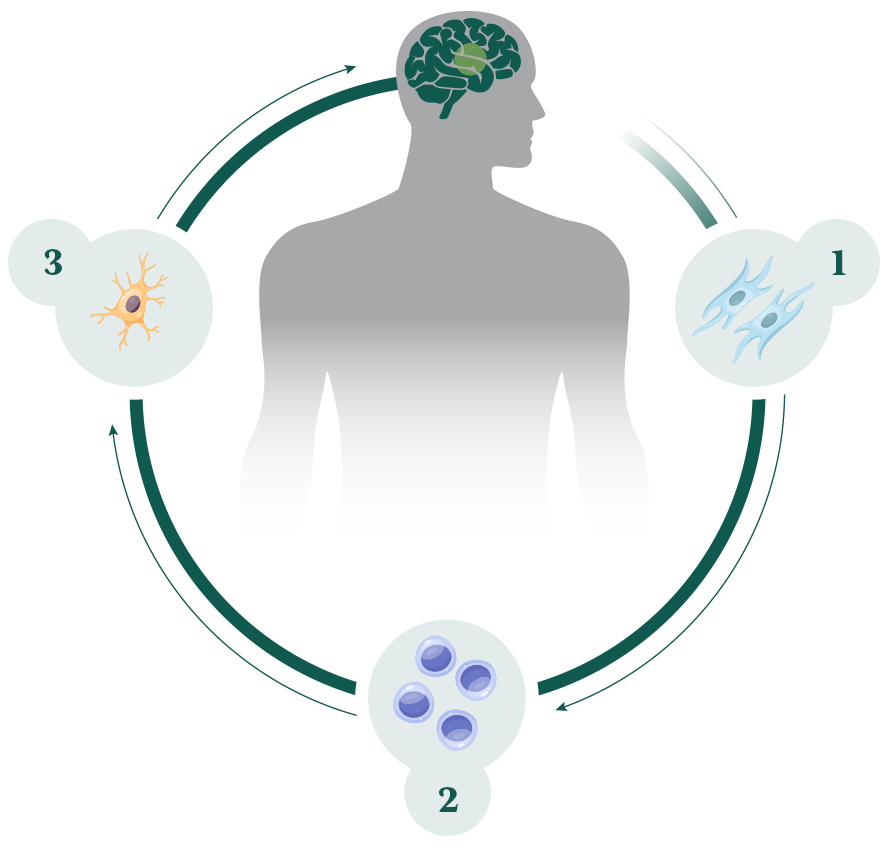
Your Cells, Your Therapy

  1. Fibroblasts

    Skin cells are isolated from a small skin punch biopsy – fibroblasts are the starting material for creating our personalized therapy.

  2. Induced Pluripotent Stem Cells (iPSCs)

    Fibroblasts are reprogrammed into iPSCs, turning back the cell’s biological clock to create a blank canvas from which a precise therapeutic target can be created.

  3. Dopaminergic Neuron Precursor Cells (DANPCs)

    In the case of Parkinson’s disease, our iPSCs are differentiated into DANPCs, precursor cells that can mature into dopamine-producing neurons.


Built to Scale with Aspen Cellevation

Aspen Nexus

Modular manufacturing system to drive scalable cost-effective, high quality iPSCs and DANPCs.

  • Automated modular format allows for the ability to scale capacity
  • All manufacturing done in-house by Aspen
  • Enables expansion to other cell types/diseases of unmet need

Aspen Vision

AI/ML algorithms that harness our scientists’ cell culture expertise.

  • Adaptive and autonomous process control are enabled by our proprietary AI/ML algorithms
  • Algorithms to quantify cell state, cell quality and ranking, and automate colony selection
  • Reduces operator dependency and training burden
  • Can be used across cell types and programs

Aspen Precision

Predictive bioinformatics for Quality Control at every stage.

  • Aspen’s ML–based genomics are designed so cells provide the intended effect
  • Quality Control assays at each stage of manufacturing ensure deep cell characterization for highly consistent cells
    • Pluritest®: Aspen’s gene expression–based bioinformatics assay used to assess the pluripotency of human stem cell lines
    • Neuritest™: Aspen’s proprietary transcriptomics-based potency and identity assay for dopaminergic neuronal precursor cells (DANPCs). It uses transcriptomic data and machine learning to determine whether a cell lot has the optimal maturity state for therapeutic efficacy
    • Other proprietary assays predict the potency of the cells and their ability to survive and produce dopamine